Best Time to Visit Hawaii: Season, Prices and Surf
In this guide
- The quick version
- There is no bad weather season — here is why
- Whale season: November to April, with a narrower sweet spot
- Surf seasons: the same beach, two different oceans
- Hurricanes and the autumn risk
- Prices: what the state’s own numbers show
- Crowds, in numbers
- Month by month
- Choosing in two minutes
- Mistakes to avoid
- Before you book
Hawaii does not have a bad season. It has expensive seasons and crowded seasons, and those are the two things actually worth planning around. Daytime temperatures at sea level sit in the 80s most of the year, the ocean never drops below about 73°F, and even the wettest months deliver showers that pass rather than weather that ruins a week.
So the short answer: April, May, September and October are the best value, with quiet beaches, reliable weather and the year’s lowest hotel rates. January to March is when you come if you want humpback whales and big north-shore surf, and you pay for it in both money and company. Christmas through New Year is the single most expensive window of the year and should be avoided unless the dates are fixed for you.
This guide works through the whale season, the two surf seasons, the rain, and the price peaks using figures the State of Hawaii and the National Weather Service actually publish. Which island to pick is a separate question, and our island comparison guide answers it — including the reservation systems at Haleakala, Diamond Head and Haena that catch people out in every month.
The quick version
| If you want | Go | The trade |
|---|---|---|
| Best overall value | Late April–May, September–October | Shorter days in autumn; a small residual storm risk in September |
| Humpback whales | January–March | Peak prices and peak crowds |
| Big north-shore surf to watch | December–February | Those same beaches are dangerous to swim |
| Calm snorkelling on north shores | May–September | South shores pick up the swell instead |
| Lowest hotel rates | September | The tail of the hurricane season, and October is the worst month for flash flooding |
| Fewest other visitors | September | Some seasonal tours and schedules thin out |
| To avoid the worst prices | Anything but late December | Christmas and New Year rates are in a class of their own |
There is no bad weather season — here is why
The National Weather Service’s climate summary for Hawaii puts it plainly: for most of the state there are only two seasons, summer from May to October and winter from October to April. The seasonal range of sea surface temperature around the islands is only about six degrees — from 73–74°F in late February and March to near 80°F in late September.
Winter is the wetter half. NWS says Hawaii’s heaviest rains come from winter storms between October and April, when the trade winds are interrupted for days or weeks at a time by cold fronts, migratory cyclones and Kona storms forming near the islands. But the agency’s own visitor FAQ is careful about what that means in practice: normal trade-wind weather still dominates about 50 percent of the time in winter, and it is unusual for rain to last more than a few hours, so even on wetter days the sun usually shines.
The variation that matters more than the calendar is geographic. Rainfall differs enormously over very short distances — windward and upland areas catch the orographic rain, leeward lowlands stay dry, and the wettest belt sits between about 2,000 and 3,000 feet of elevation. A rainy week in Hanalei and a dry week in Waikoloa can be the same week.
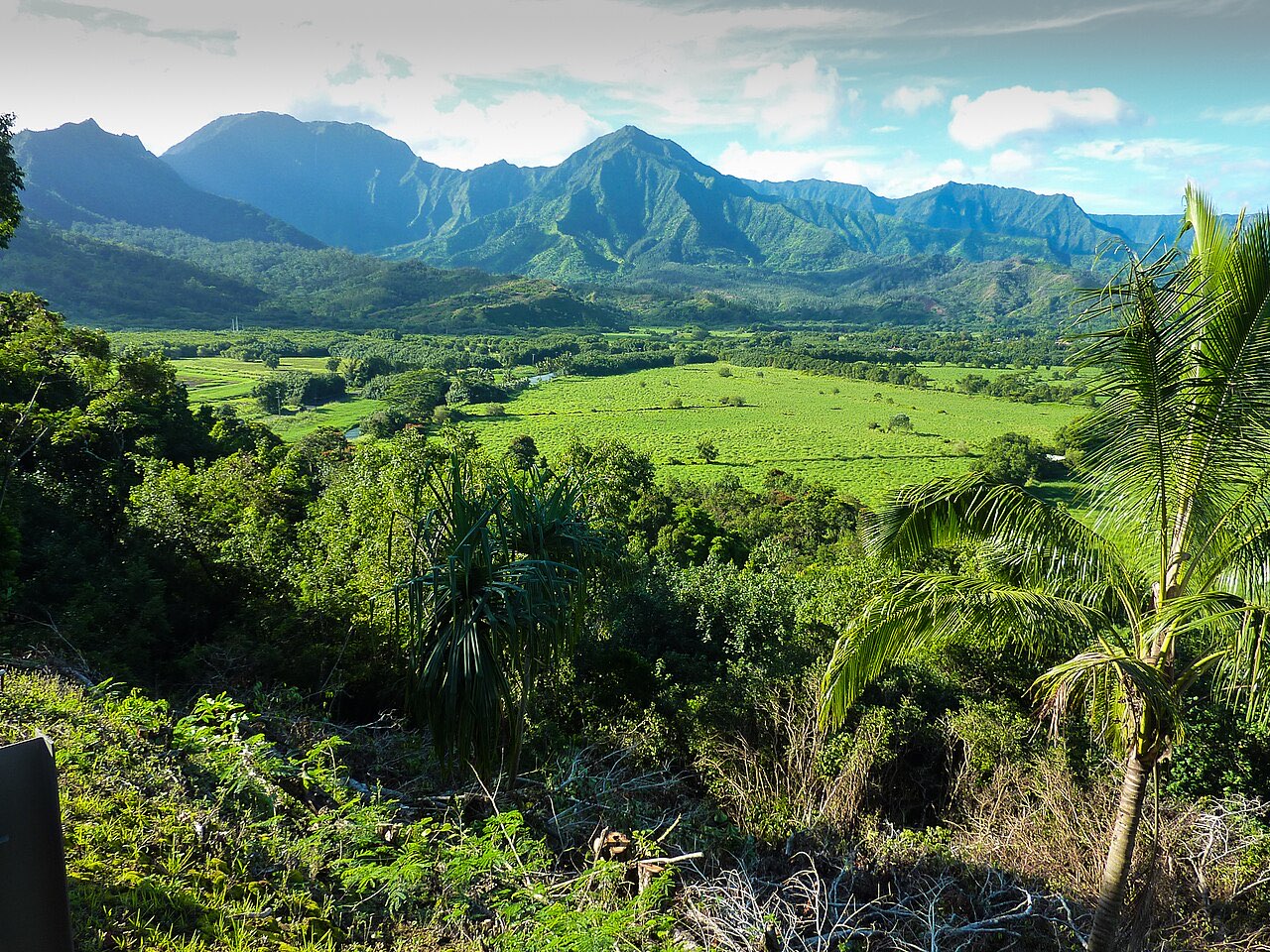
Two caveats. Winter cold fronts can drop nights into the 50s°F and hold days in the low 70s. And altitude is a different climate entirely: above 10,000 feet on Haleakala, Mauna Kea and Mauna Loa, NWS says winter days only reach the 40s and nights the 20s, with several inches to feet of snow normal above 12,000 feet. Pack for the summit if you plan a sunrise or a stargazing night; our Hawaii packing list covers it.
And the honest exception: weather does occasionally bite. In March 2026 two Kona low systems brought widespread flooding and landslides across the state, disrupting flights and denting hotel occupancy, according to the state’s March 2026 hotel performance report. That is a real risk in the winter half of the year, not a reason to avoid it.
Whale season: November to April, with a narrower sweet spot
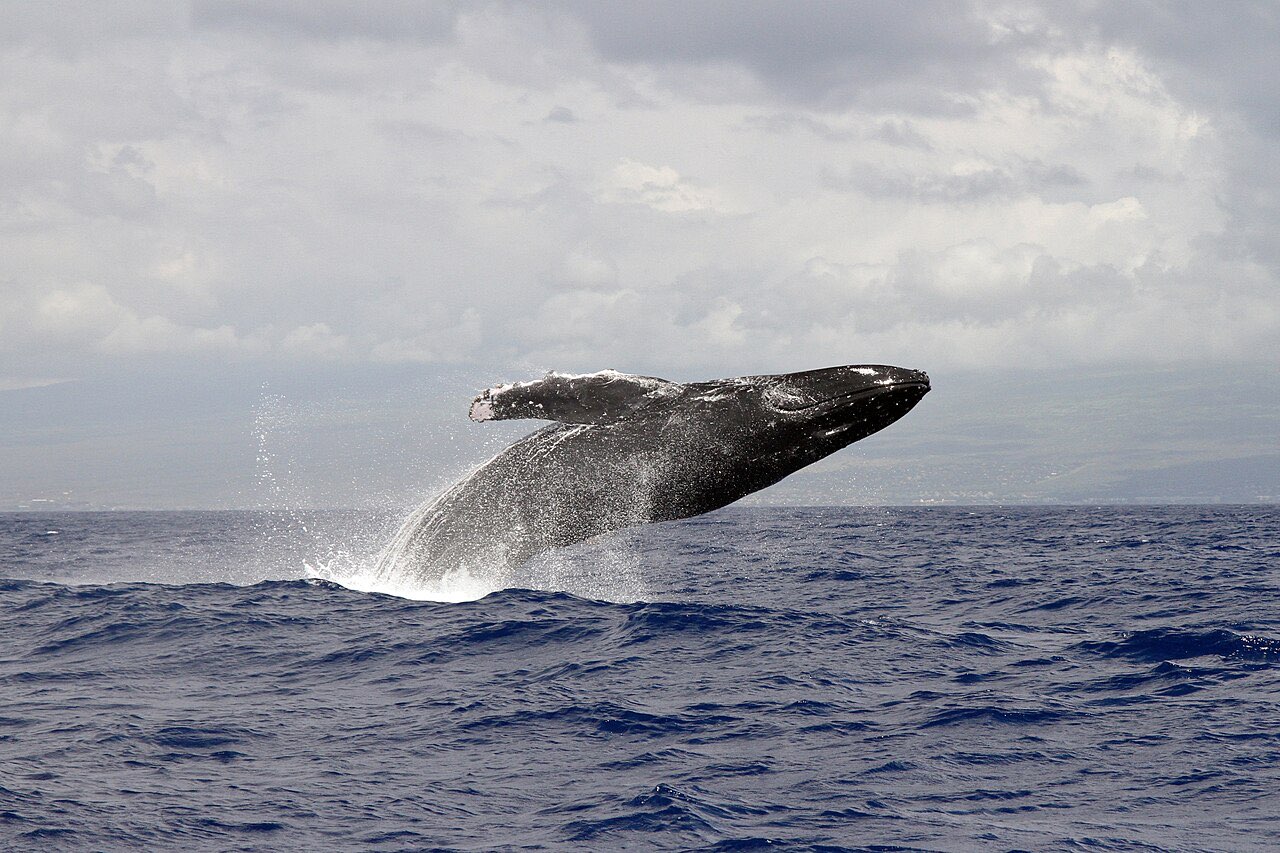
NOAA’s Hawaiian Islands Humpback Whale National Marine Sanctuary states the window directly: from November through April, visitors can see whales from shore and at sea. North Pacific humpbacks come to Hawaii’s warm shallow water to mate, give birth and raise calves, and more than half of the North Pacific population uses these waters as its principal breeding and calving ground.
Within that window, the middle is the safe bet. The sanctuary’s volunteer Sanctuary Ocean Count, which has run since 1996, takes its shore-based counts in the winter months — the 2025 edition put 1,353 volunteers at 44 sites across six islands and recorded 4,782 humpbacks over three days, although the sanctuary notes that total may include duplicate sightings of the same animal. By June, the sanctuary reported, most whales had already left for their northern feeding grounds.
Practical notes:
- The legal approach distance is 100 yards, for boats, kayaks, paddleboards and swimmers alike. The sanctuary runs an enforcement hotline (800-853-1964) and an entanglement hotline (888-256-9840); the 2024-25 season was the response network’s busiest, with 32 reports covering 16 entangled whales. Report, do not approach.
- You do not need a boat. Shore watching from elevated points works in peak season — that is the entire premise of the Ocean Count. If a boat trip is the point of the trip, read our Hawaii whale watching guide first.
Do not build a non-refundable itinerary around a single sighting. The season is reliable; any given morning is not.
Surf seasons: the same beach, two different oceans
This is the seasonal fact that most affects what you can actually do in the water, and it is the one most visitors get wrong.
Winter, north and west shores. North Pacific storms send big swell at the islands from roughly November through March. NWS states that surf higher than 25 feet occurs on north and west shores many times each winter, and that large surf episodes continue into March. This is why the professional contests run on Oahu’s North Shore in winter, and why the same stretch of sand is a swimming beach in August and a spectator sport in January.
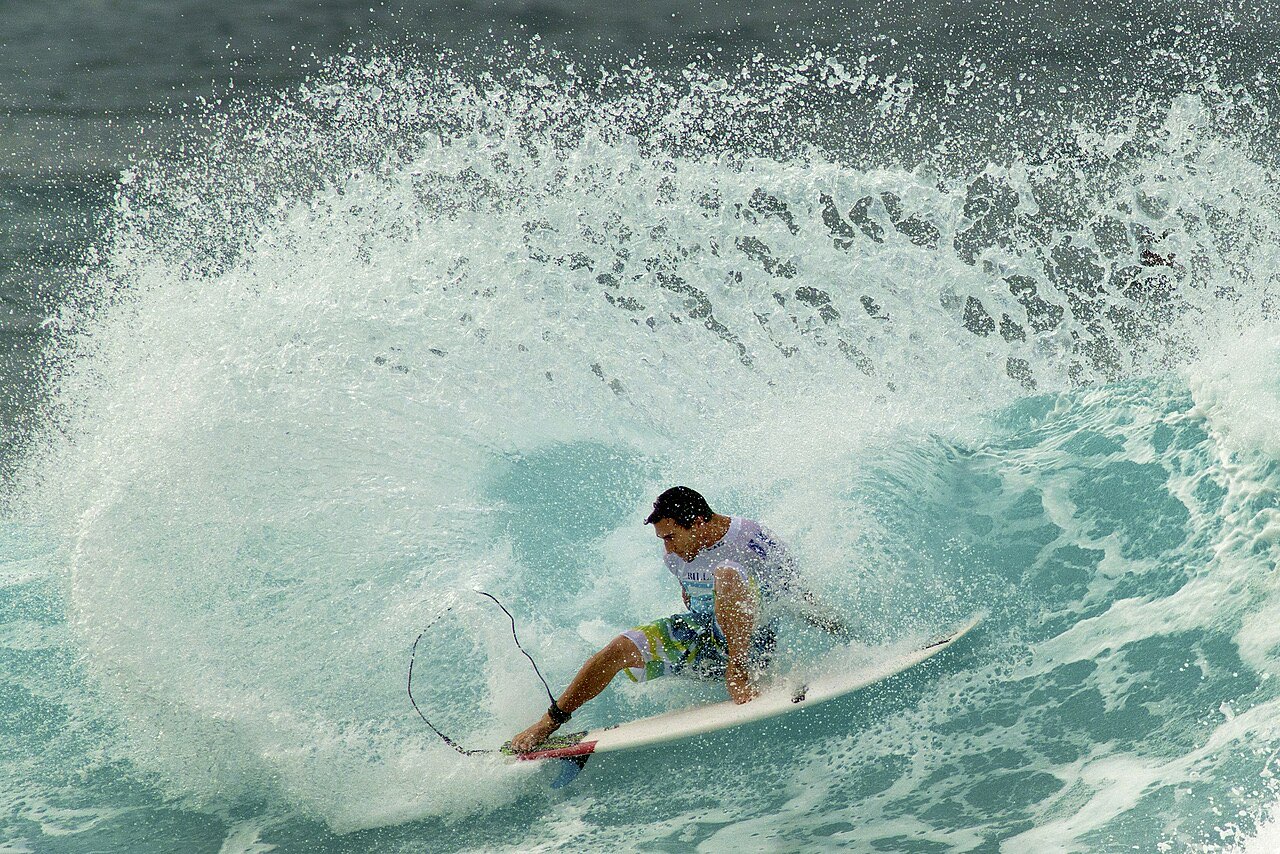
Summer, south shores. NWS calls summer the peak of the south-shore season: storms thousands of miles away in the southern hemisphere send swell north roughly weekly, and because the swell travels so far, the largest south-shore surf is about 10 to 15 feet — big, but a different order from the winter north shore.
What that means for planning: north-shore snorkelling is a summer activity, and in winter you move to the south or the sheltered leeward coasts — our Hawaii snorkeling guide covers the sites. To watch serious surf, come December to February. And for swimming, check the forecast daily rather than trusting the season: high-surf advisories move fast, and the ocean is the main hazard for visitors. See our Hawaii beach safety guide.
Hurricanes and the autumn risk
The central Pacific hurricane season runs 1 June to 30 November. The practical risk profile is gentler than the Atlantic’s: NWS says the vast majority of the time storms stay far enough away that no impact is noted in the state, and the threat typically diminishes quickly by early October, though in El Niño years it can continue into November — Hurricane Iwa struck around Thanksgiving in 1982. On 23 October 2026 the Central Pacific Hurricane Center listed no tropical cyclones in the basin.
The bigger autumn nuisance is rain, not wind. NWS notes that more flash flooding occurs in October than in any other month, as early North Pacific storms reach far enough south while the air is still tropical. If you take the September-October value, pack a rain shell and avoid remote dirt roads and narrow valleys on a day with a flood watch.
Prices: what the state’s own numbers show
Hawaii’s lodging costs are published monthly by the state through STR’s hotel survey, and the shape of the year is clear. In the March 2026 report, statewide average daily rate for March 2026 was $376.00 with occupancy of 74.5 percent, and the year-to-date figure through March was $379.65 at 76.4 percent. The same report charts rate by month: December sits far above everything else at roughly $450, September sits lowest at roughly $315, and May and October fall in the $325–$340 range. Those monthly figures are read off a chart rather than a table, so treat them as approximate — but a December-to-September gap of well over $100 a night is not a rounding error.
Island differences are larger than monthly ones. In March 2026 the average daily rate was $274.19 on Oahu ($256.33 in Waikiki) against $560.98 in Maui County, $485.14 on Hawaii Island and $432.91 on Kauai. The month you choose moves your bill by perhaps 25 percent; the island can move it by 100 percent. Our Hawaii budget and costs guide breaks the rest down.
Flights follow a similar calendar — Christmas and New Year, spring break, summer — but no official source publishes Hawaii airfare by month, so treat fare advice anywhere (including here) as a pattern rather than a quote. One proxy the state does publish is air load factor: in 2026 it ran 83 percent in January and February but 94.7 percent in June and 93.2 percent in July, which tells you when seats are scarce and discounting stops.
Crowds, in numbers
The state’s monthly visitor statistics include an average daily census — the number of visitors physically present on an average day — which is a better crowd measure than arrivals. For 2025 the full year ran:
| Month | Visitors present on an average day (2025) | Total arrivals by air (2025) |
|---|---|---|
| January | 243,535 | 769,679 |
| February | 238,338 | 747,854 |
| March | 242,038 | 877,072 |
| April | 225,786 | 797,308 |
| May | 208,627 | 764,574 |
| June | 245,053 | 832,586 |
| July | 249,946 | 881,396 |
| August | 223,317 | 817,504 |
| September | 189,159 | 682,022 |
| October | 198,760 | 732,466 |
| November | 211,486 | 731,033 |
| December | 247,706 | 862,128 |
July, December and June are the busiest; September and October are the quietest by a clear margin — roughly 60,000 fewer people on the islands on an average September day than in July. Preliminary 2026 data follows the same pattern, with an August census of 187,698.
Month by month
| Month | Weather | Ocean | Crowds and prices | Worth knowing |
|---|---|---|---|---|
| January | Winter pattern: fronts, Kona lows, warm between them | Big north/west surf | High; rates near the annual top | Whale season in full swing |
| February | Wettest-feeling month on windward sides; coolest sea, 73–74°F | Peak north-shore swell | High | Usually the strongest month for whales |
| March | Still winter per NWS; trades can blow 30 mph+ | Large surf episodes continue | Spring-break spike; ADR $376 in 2026 | Kona lows caused statewide flooding in March 2026 |
| April | Pattern shifts to normal trade winds | North shores settling | Easter spike, then a real drop | Last of the whale window |
| May | Dry season begins; reliably sunny leeward | North shores calm; south starting | Among the best value; ADR near $340 | Quietest beaches before summer |
| June | Settled trade winds, 80s°F | South-shore season building | Summer prices arrive; load factor 94.7% in 2026 | Hurricane season opens, risk still low |
| July | Hot and dry leeward, showers windward | South-shore peak | Busiest month; ~250,000 present daily | Book everything early |
| August | As July; warmest water builds | South swells continue | Falls back late in the month | Historically the most active tropical period |
| September | Still summer; warmest sea near 80°F | Calm on most shores | Cheapest and quietest | Tail of the tropical season |
| October | Transition; trades ~70% of the time | North shores begin to wake | Low prices hold | Worst month of the year for flash flooding |
| November | Winter storms start reaching south | North-shore surf builds | Quiet until Thanksgiving | Whale season opens |
| December | Winter pattern established | Big north-shore surf | The year’s price peak, ADR roughly $450 | Christmas and New Year are a different market |
Choosing in two minutes
- Best value, good weather, few people: late April to May, or September to mid-October.
- Whales are the priority: January to March, at peak-season rates.
- Family trip tied to school holidays: June or July, booked months out. See Hawaii with kids.
- Swimming and snorkelling above all: May to September, picking your shore by season rather than by photo.
- Fixed Christmas dates: go, but book flights and cars very early.
Mistakes to avoid
Treating “rainy season” as “ruined trip”. NWS says winter rain rarely lasts more than a few hours and that trade-wind weather still dominates about half of winter. Book a leeward base and you will mostly watch the rain happen elsewhere.
Booking a north-shore swimming holiday in January. The season, not the beach, decides whether the water is usable. Switch shores or switch months.
Assuming September is risky because it is hurricane season. It is the cheapest and quietest month, and NWS says most systems never affect the state.
Planning the whole trip around whales on one morning. The season runs November to April, but no operator can promise a particular day.
Ignoring elevation. Summit temperatures in the 40s with snow above 12,000 feet are normal in winter, and people turn up at Haleakala for sunrise in shorts every week of the year.
Spending the saving on a second island. Shoulder-season value disappears fast once you add a transit day and a second rental car. Our inter-island travel guide covers when a hop is worth it, and the seven-day itinerary covers doing one island properly.
Before you book
Pick the island before the month — the cost gap between Oahu and Maui is bigger than the gap between September and December, and our island comparison covers both the money and the reservation systems. Then check the National Weather Service Honolulu office for surf and flood advisories close to departure.
Rates, visitor counts and seasonal patterns in this guide were taken from State of Hawaii and National Weather Service publications in October 2026. Hotel figures are survey averages, not quotes, and the monthly rate values are approximate; confirm current conditions and prices before you pay for anything.
Frequently asked questions
What is the best month to visit Hawaii?
April, May, September and October are the best value. They sit outside the big price peaks, the weather is reliable, and the islands are emptier — state figures show about 189,000 visitors present on an average day in September 2025 against about 250,000 in July. If whales matter more than money, come between January and March instead. There is no month where Hawaii's weather makes the trip not worth taking.
When is whale season in Hawaii?
NOAA's Hawaiian Islands Humpback Whale National Marine Sanctuary says visitors can see humpbacks from shore and at sea from November through April. The animals come to breed and calve, and more than half of the North Pacific humpback population uses Hawaiian waters as its main wintering ground. Sightings concentrate in the middle of that window — the sanctuary's volunteer Ocean Count runs in the winter months — so January to March is the safest bet. Federal law requires you to stay 100 yards away.
What is the rainy season in Hawaii?
The National Weather Service treats Hawaii as having two seasons: summer from May to October and winter from October to April, and says the heaviest rains come from winter storms between October and April. That does not mean a washed-out trip. NWS says normal trade-wind weather still dominates about half the time in winter, and that rain rarely lasts more than a few hours. October has more flash flooding than any other month.
When is the surf biggest in Hawaii?
North and west shores in winter, south shores in summer. The National Weather Service says surf higher than 25 feet hits north and west shores many times each winter, driven by North Pacific storms, and that summer is the peak of the south-shore season, when swells from the southern hemisphere produce surf of about 10 to 15 feet. The practical consequence is that a north-shore beach that is calm in July can be unswimmable in January.
What is the most expensive time to visit Hawaii?
Christmas and New Year, by a wide margin. The state's hotel performance report shows statewide average daily rate peaking sharply in December, at roughly $450 against about $315 in September — the chart values are approximate, but the shape of the year is not in doubt. Spring break lifts March, and summer lifts June and July. The exact March 2026 statewide figure was $376.00 at 74.5 percent occupancy.
Is hurricane season a reason to avoid Hawaii?
Not on its own. The central Pacific hurricane season runs 1 June to 30 November, but the National Weather Service notes the threat for tropical systems usually diminishes quickly by early October, and that most systems stay far enough away to have no effect on the state. On 23 October 2026 the Central Pacific Hurricane Center listed no tropical cyclones in the basin. Check the CPHC page before you travel rather than avoiding the months outright.
Keep planning
- Which Hawaiian Island Should You Visit? An Honest Comparison
Which Hawaiian island to visit: Oahu, Maui, Kauai and Hawaii Island compared on cost, driving, crowds and who should skip each one.
Updated Oct 2026 - Best Time to Visit Costa Rica: Dry, Green and Shoulder Season
Best time to visit Costa Rica month by month: Pacific dry season dates, why the Caribbean is driest in September, and green season prices.
Updated Oct 2026 - Best Time to Visit the Dominican Republic: Season by Coast
Best time to visit the Dominican Republic month by month: hurricane season dates, Samana whale season, sargassum by coast, and why the north coast runs backwards.
Updated Oct 2026