Best Time to Visit the Dominican Republic: Season by Coast
In this guide
The short answer is February or March. Those two months sit inside the dry season for the south and east coasts, are the least wet months on the north coast and in Samana, fall inside the humpback whale season, and land before sargassum normally builds on the east-facing beaches. Everything else is a trade.
The longer answer is that the Dominican Republic does not have one season. The south and east coasts run a conventional Caribbean calendar, dry in winter and wet from late spring. The north coast, exposed to the trade winds, runs close to the opposite: its wettest months are November and December, and its driest stretch is high summer. Picking a month without picking a coast first is how people end up disappointed.
The quick version
| If you want | Go | Why |
|---|---|---|
| The safest all-round trip | February–March | Dry on the south and east, least wet on the north, whale season, pre-sargassum |
| Humpback whales in Samana | Mid-January–late March | The regulated viewing season; February is usually the peak |
| Lowest prices | Late August–early November | Peak hurricane risk and the wettest stretch in much of the country |
| Best value without peak storm risk | Late April–June | After high season, before the worst of the season and before sargassum typically peaks |
| Reliable wind for kitesurfing on the north coast | Winter and early summer | Cabarete is built around the trade winds |
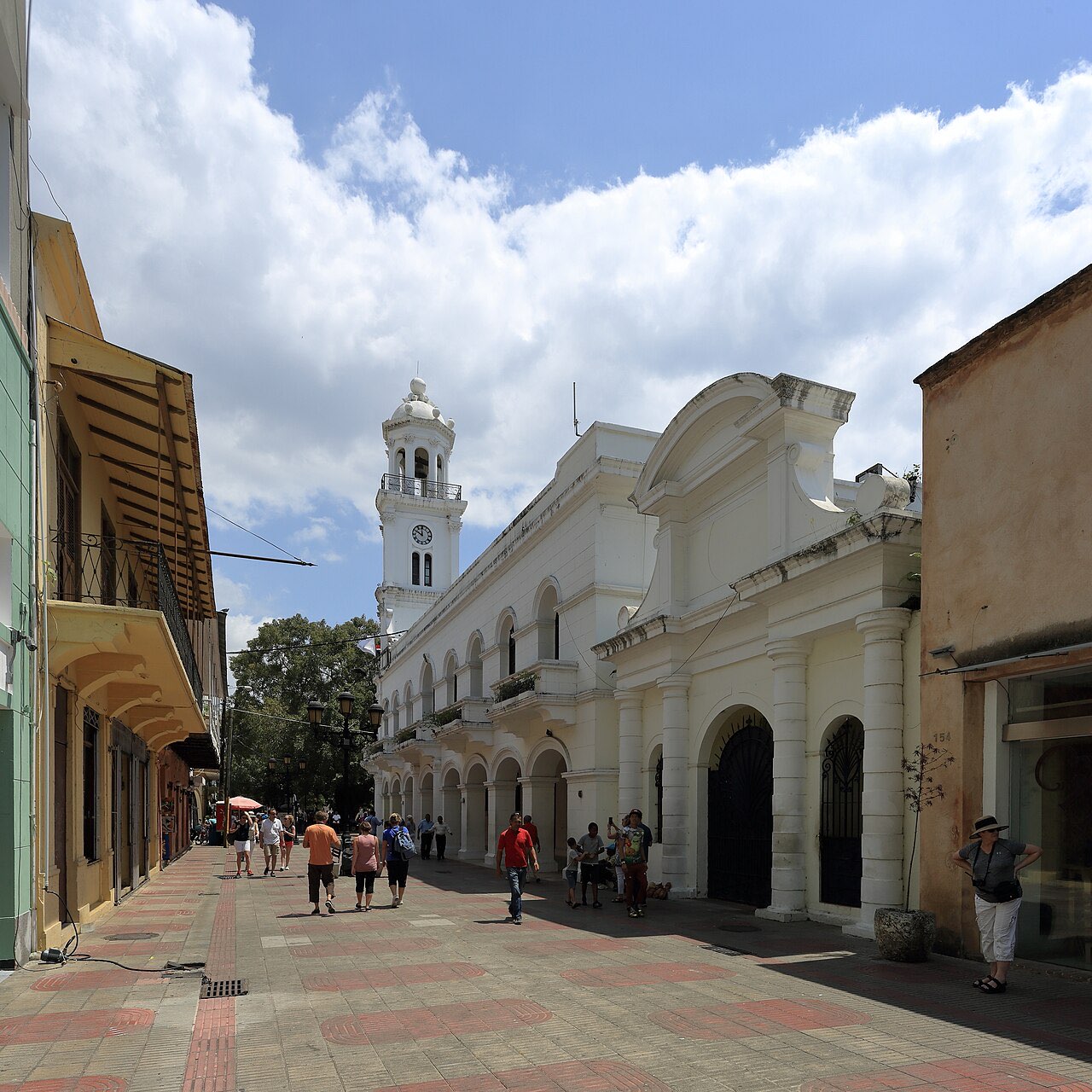
| Santo Domingo city breaks | December–April | Drier and less humid; the south coast’s rainy period is usually May–October |
Hurricane season: the dates that matter
The Atlantic hurricane season officially runs 1 June to 30 November, and the National Hurricane Center puts the statistical peak at 10 September, with most activity between mid-August and mid-October. The US State Department describes tropical storms and hurricanes affecting the Dominican Republic “generally from May through November”.
Some context that gets lost in the headline dates. Based on 1991–2020 climatology, an average Atlantic season has 14 named storms, 7 hurricanes and 3 major hurricanes — but that is across the entire basin, from Africa to Texas. The first named storm typically forms in mid-to-late June, the first hurricane in early-to-mid August, and the first major hurricane in late August or early September. In a typical season, only three named systems have formed by 3 August. NHC also notes that activity sometimes occurs outside the official dates.
How to translate that into a decision:
- June and July carry season-opening risk that is statistically low. Most travellers in these months see rain showers, not storms.
- Mid-August to mid-October is the window where the risk is concentrated. If you travel then, insure the trip for weather disruption and prefer changeable fares.
- November tails off, and by late November the south-coast dry season is beginning.
See our Dominican Republic hurricane season guide for rebooking, insurance and what resorts typically do when a storm is forecast.
Why the north coast runs backwards
This is the detail most round-ups get wrong. The north coast sits in the path of the north-east trade winds, which deliver rain in the winter months, when the rest of the Caribbean is dry.
Per the climate reference Climates to Travel, the eastern and southern coasts have a rainy season from late April to October, while the northern coast “is rainy throughout the year”. On the central-western north coast — Monte Cristi, Luperon, the Amber Coast — the pattern inverts outright: the least rainy season is June to September, and the trade-wind winter is the wet one. Puerto Plata’s wettest months by that source’s normals are November (10.2 in) and December (7.7 in), against June, July and August at 2.2, 2.8 and 3.1 inches.
The Samana peninsula is a third case again: it is rainy in summer as well as winter, so it has no real dry season. February and March are its least wet months, which happily coincides with whale season.
Punta Cana, by contrast, gets about 1,100 mm (43 in) of rain a year — modest for the Caribbean — spread fairly evenly from May to December. Santo Domingo, unprotected by mountains, gets roughly 1,450 mm (57 in). For a national baseline, a UNDP country climate profile for the Dominican Republic puts the wet season at May to November, with most regions receiving 100–200 mm a month.
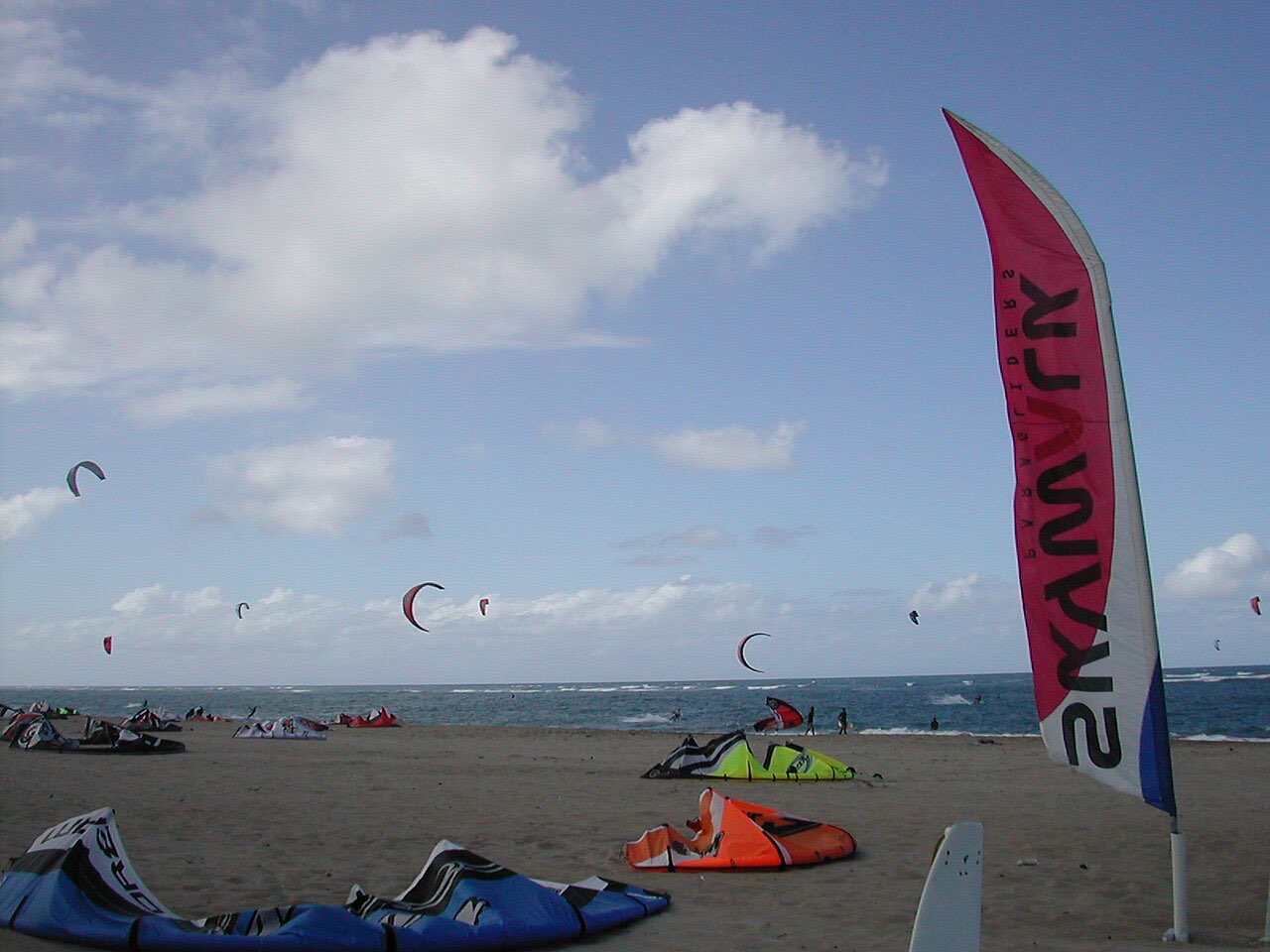
The practical consequence: if your trip is Punta Cana or Santo Domingo, December to mid-April is the straightforward answer. If it is Puerto Plata and the north coast or Las Terrenas, aim at February and March, or consider high summer, which is drier there than most people expect. Those same trade winds are why Cabarete is a kitesurfing town rather than a swimming one.
Whale season in Samana
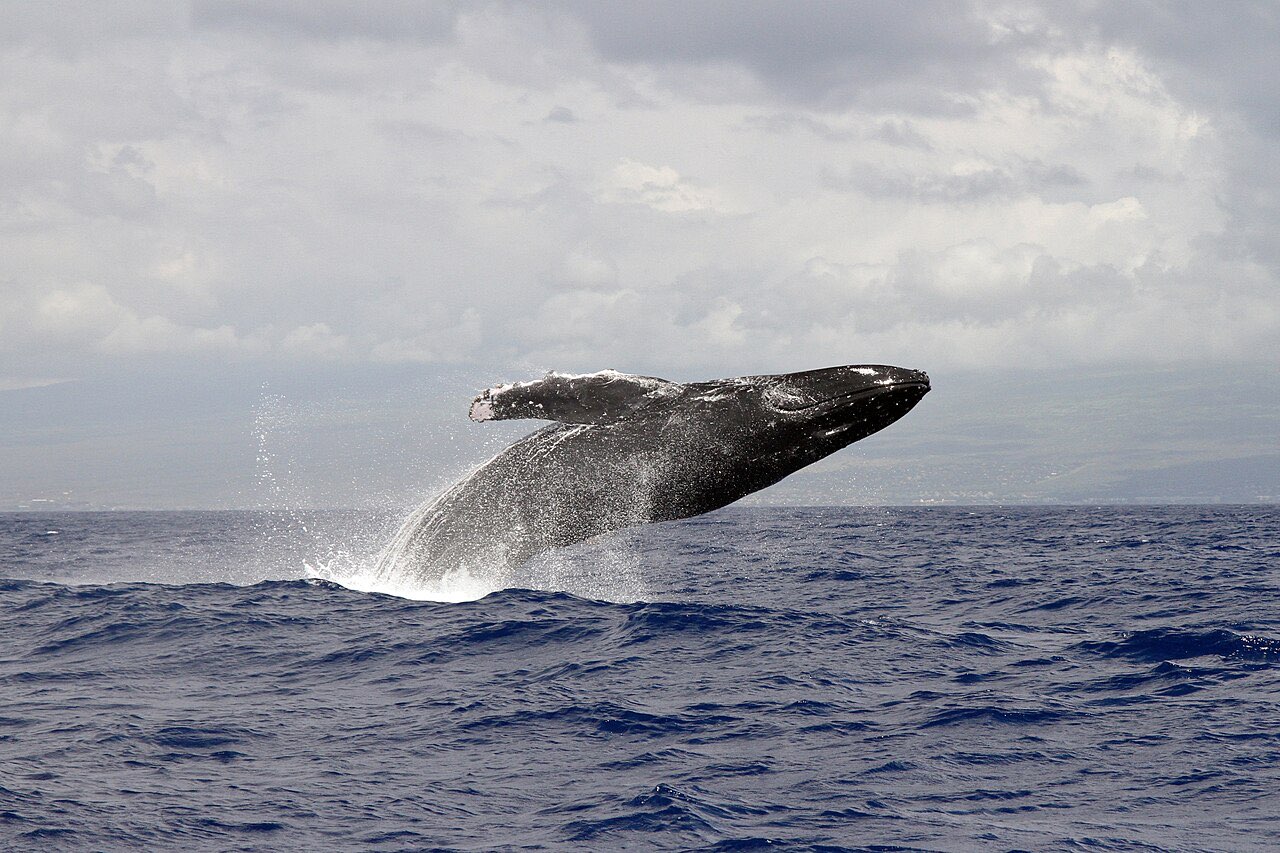
North Atlantic humpbacks migrate to the waters off the Samana peninsula and the Silver Bank to breed and calve in the northern winter, and watching them is regulated.
Both the Dominican tourism board’s Samana whale page and the International Whaling Commission’s country profile describe the whale-watching window as January to March. The Ministry of Environment sets the official regulated season dates each year; third-party sources commonly cite mid-January to late March, but they do not agree on the exact closing date, so confirm with a permitted operator rather than booking a flight around a date you read in a blog. February is the month most often described as the peak.
A few things to plan around:
- Trips run from Samana town, with boats working inside the bay under permit. Operator numbers and approach distances are controlled.
- Sea conditions vary; a bay trip in February is normally manageable, but bring motion-sickness tablets if you are prone.
- Many visitors pair a whale trip with Los Haitises National Park, across the bay, which works well as a half-day add-on.
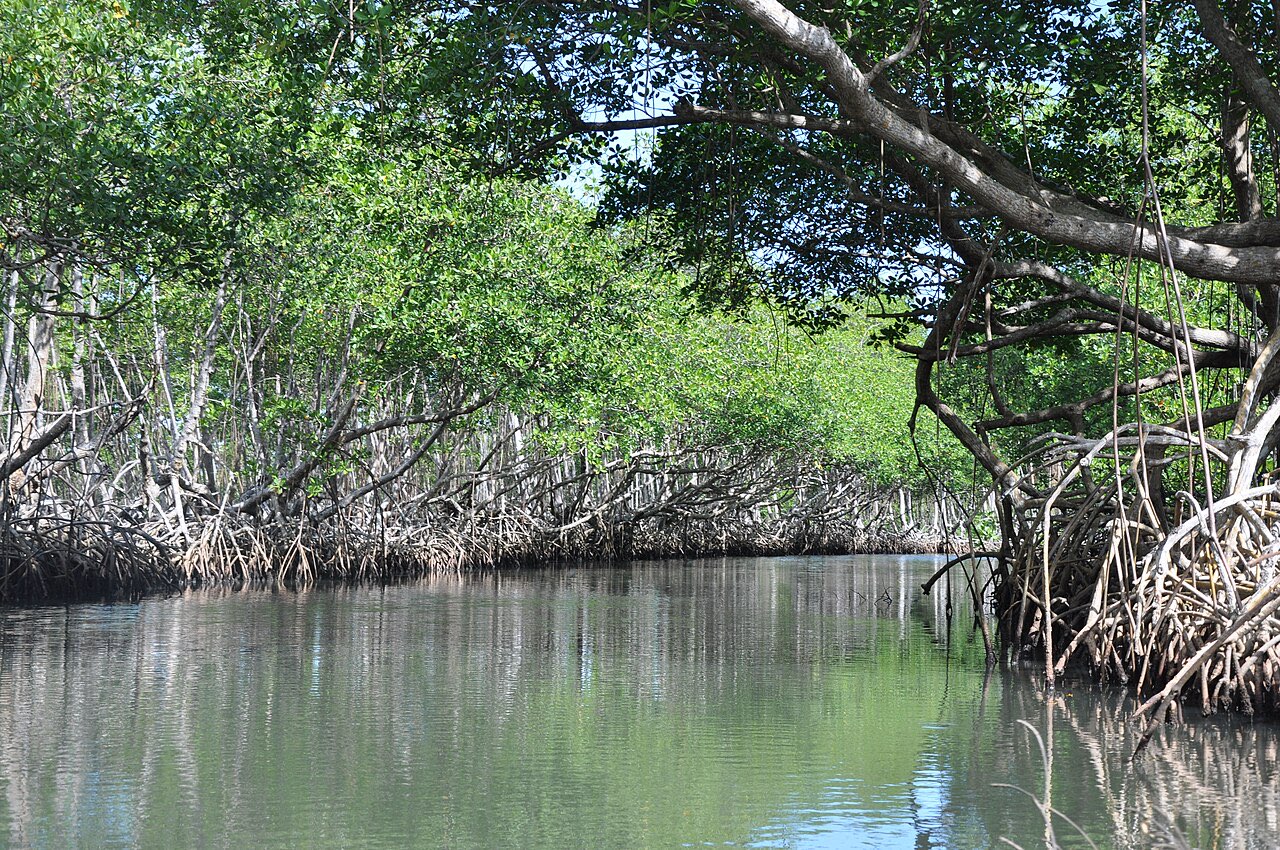
Our dedicated Samana whale watching guide covers operators, permits and how to get there.
Sargassum: which coast, and when
Sargassum is the brown seaweed that drifts west out of the Atlantic and piles up on exposed beaches. It is a nuisance rather than a danger, but it can change the character of a beach day.
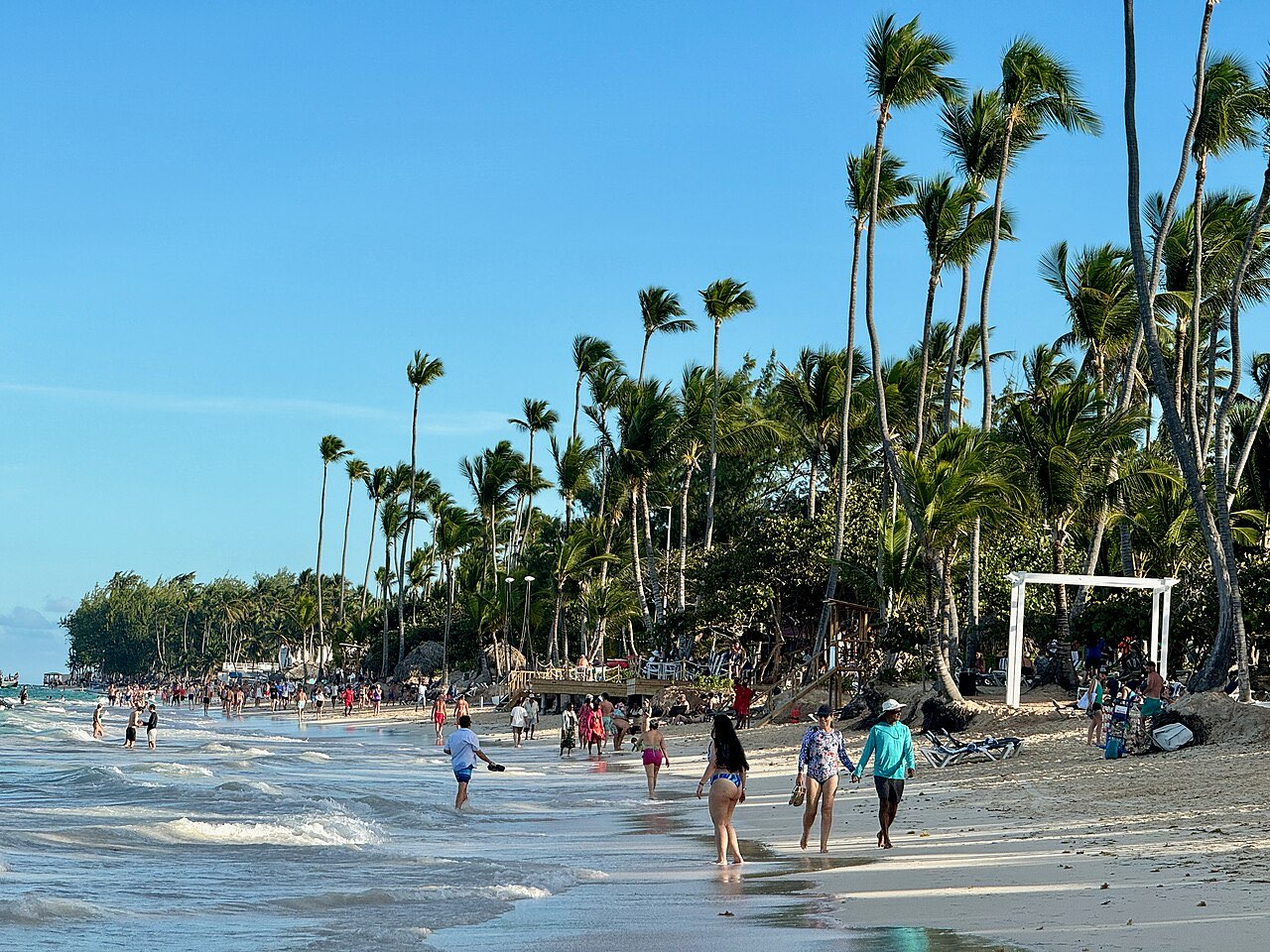
Geography does most of the work. Commercial monitoring services describe the east- and southeast-facing coast — Punta Cana, Bavaro and the Bavaro-to-Uvero Alto strip — as the most exposed, with the north coast (Puerto Plata, Sosua, Cabarete) and the southwest around Barahona generally far less affected. Reported peak months are roughly May through August. We could not verify that coast-by-coast breakdown against a Dominican government or peer-reviewed source, so treat it as a tendency rather than a rule.
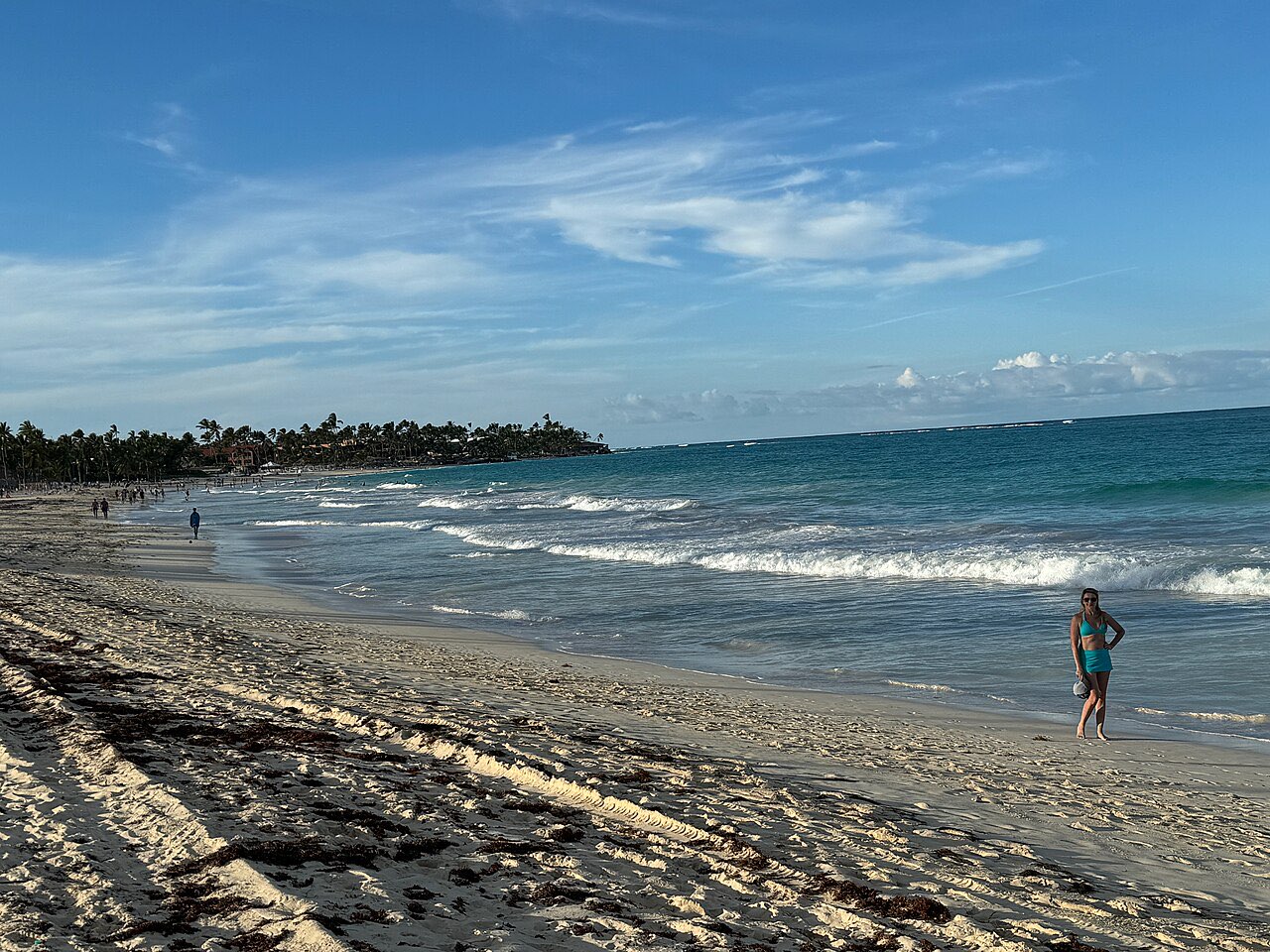
What you can verify is the basin-wide picture. The University of South Florida Optical Oceanography Lab has published a monthly Sargassum outlook bulletin for the Caribbean since 2018, released on the last day of each month. Its September 2026 bulletin reported that sargassum amounts continued to decline in almost every region but remained relatively high compared with previous years for the same month, with the outlook expecting continued decline “until possibly November”. January 2026 had been a record January: Caribbean sargassum rose from 0.45 million tons in December 2025 to 1.7 million tons. CariCOOS republishes the USF outlook alongside regional tracking.
Practical approach: read the USF bulletin for the trend, check a beach report posted in the last day or two for the specific resort, and keep a pool or a north-coast fallback in mind. More in our Dominican Republic sargassum guide.
Month by month
| Month | Weather, south and east | North coast and Samana | Crowds and prices | Notes |
|---|---|---|---|---|
| January | Dry, warm, low humidity | Still in the wet trade-wind pattern | High; peaks over New Year | Whale season opens mid-month |
| February | Dry; the strongest all-round month | Least wet month of the year | High | Whale peak; Carnival Sundays raise city prices |
| March | Dry, warm | Least wet alongside February | High, with spring-break spikes | Whale season closes late in the month |
| April | Dry until mid-month, then rain builds | Rain increasing | High around Easter, then falls | Good value after Easter |
| May | Rainy season begins on the south coast | Rain easing in the northwest | Low-shoulder | Sargassum typically starts building in the east |
| June | Warm, humid, afternoon showers | Driest stretch begins on the northwest coast | Low | Hurricane season opens; statistical risk still small |
| July | Hot and humid, showers | Dry and hot on the north coast | Mid; local and European holidays | Sargassum often at or near peak in the east |
| August | Hot, humid, wetter | Still relatively dry in the northwest | Mid, falling late | Risk rises sharply from mid-month |
| September | Wettest and riskiest | Rain returning | Lowest | 10 September is the season’s statistical peak |
| October | Wet, storm risk still elevated | Rain building | Low | Cheapest flights often land here |
| November | Rain easing; dry season beginning late | Wettest month on the north coast | Low until late | Season officially ends 30 November |
| December | Dry and pleasant | Second-wettest on the north coast | Rises steeply from mid-month | Christmas and New Year are the year’s price peak |
Events worth timing around
Carnival runs through February, with parades in towns across the country on Sundays and the best-known celebrations in La Vega and Santo Domingo. The main national parade in the capital falls at the end of February or the start of March; exact dates move each year and we did not verify the 2027 dates, so check before booking. Carnival lifts hotel prices in the cities but barely touches the resort coasts.
Independence Day, 27 February, sits in the middle of Carnival season and is a national holiday.
Semana Santa (Holy Week) is when Dominicans themselves travel. Beaches, roads and buses are at their busiest, prices spike, and some businesses close. Either plan around it or accept the crowds.
Practical notes that affect any month
- The eTicket is required for every entry and exit. The US State Department confirms travellers must complete the Dominican migration eTicket each way. Our entry requirements guide has the detail.
- The advisory level is Level 2, Exercise increased caution, for crime, as issued 12 June 2025. Resort areas have a dedicated tourist police force, POLITUR.
- Driving is the real risk, in any season. The State Department cites a road-crash mortality rate of 65.2 deaths per 100,000 people and calls it the highest in the world, with the advice to “drive with extreme caution”. Wet-season roads make that worse. See driving in the Dominican Republic.
- Tap water is not safe to drink in many areas. Use bottled water year round.
- Hurricane-season bookings should be flexible. Changeable fares and insurance that covers weather disruption cost less than a lost week.
Putting it together
If this is a first trip and you want one month that works everywhere, take February: dry in Punta Cana and Santo Domingo, the least wet month on the north coast and in Samana, inside whale season, and well before sargassum usually peaks. The costs are peak-season prices and a crowded Samana.
If you are price-sensitive and willing to carry some weather risk, late April to early June gives you shoulder prices, a mostly dry south coast, the start of the drier window on the north-west coast, and a sargassum picture that is usually still building rather than peaking.
If your trip is specifically Punta Cana and the beach is the whole point, bias toward December to April and accept the prices. If it is Santo Domingo and the Zona Colonial, the same window is drier and far less humid for walking. If you want the mountains instead, Jarabacoa and Constanza are cool year round and genuinely cold on winter nights.
Dates, advisory levels and seasonal patterns here were checked in October 2026. Confirm the hurricane outlook at the National Hurricane Center and the whale season with a permitted operator before you book around them.
Frequently asked questions
What is the best month to visit the Dominican Republic?
For the south and east coasts, including Punta Cana and Santo Domingo, the reliable window is December to mid-April. For the north coast and the Samana peninsula, where the trade winds bring rain in winter, February and March are the least wet months. If you want humpback whales in Samana, you have to come in the regulated season, which runs roughly mid-January to late March. Those three answers overlap in February and March, which is why those two months are the safest single pick for a first trip.
When is hurricane season in the Dominican Republic?
The Atlantic hurricane season officially runs 1 June to 30 November, per NOAA's National Hurricane Center. The statistical peak is 10 September, with most activity between mid-August and mid-October. The US State Department describes tropical storms and hurricanes affecting the Dominican Republic generally from May through November. An average Atlantic season produces 14 named storms, 7 hurricanes and 3 major hurricanes across the whole basin, so any single island is affected far less often than those numbers suggest.
When can you see whales in Samana?
North Atlantic humpbacks gather off Samana to breed and calve in the northern winter. The Dominican tourism board and the IWC both describe the whale-watching window as January to March, and the Ministry of Environment sets the official regulated season each year, commonly cited as mid-January to late March. Exact opening and closing dates vary by year, so confirm with a permitted operator before you book flights around it. February is the month most often described as the peak.
Which Dominican coast gets sargassum, and when?
Sargassum drifts in from the Atlantic, so the east- and southeast-facing coast around Punta Cana and Bavaro is the most exposed, while the north coast around Puerto Plata, Sosua and Cabarete and the southwest around Barahona generally see less. Reported peak months are roughly May through August. That pattern comes from commercial monitoring services rather than a Dominican government source, so treat it as a tendency and check a current beach report plus the University of South Florida's monthly Sargassum outlook before committing.
Is September a bad time to go to the Dominican Republic?
It is the cheapest month and the riskiest. 10 September is the statistical peak of the Atlantic hurricane season and the water is at its warmest. Most September trips are fine, and a storm anywhere in the basin does not mean a storm over Hispaniola, but you should buy insurance that covers weather disruption, book changeable flights, and accept that some excursions may be cancelled. Our hurricane season guide covers rebooking.
When is the cheapest time to visit the Dominican Republic?
Roughly late August through early November, which overlaps the most active part of hurricane season. Late April to June is the better-value compromise: it falls after the winter high season ends, before the worst of the storm risk, and before sargassum normally peaks on the east coast. Christmas, New Year and the weeks around Easter are the most expensive, and Carnival in February pushes prices up in Santo Domingo and La Vega.
Keep planning
- Is the Dominican Republic Safe? Resorts, Cities and Driving
Is the Dominican Republic safe? What the US and UK advisories actually say, why roads are the biggest risk, and how resort and independent travel differ.
Updated Oct 2026 - Best Time to Visit Costa Rica: Dry, Green and Shoulder Season
Best time to visit Costa Rica month by month: Pacific dry season dates, why the Caribbean is driest in September, and green season prices.
Updated Oct 2026 - Best Time to Visit Hawaii: Season, Prices and Surf
Best time to visit Hawaii month by month: whale season, winter surf, the rainy season and the price peaks that actually decide when you should go.
Updated Oct 2026